Showing posts with label SOUTHAMERICA. Show all posts

Saturday

Iguazu Falls – Argentina

Iguazu Falls – Argentina is tagged as one the “great natural wonders of the world” and other popular falls around the world, including the Niagara Falls rather pale in comparison – as was declared by First Lady Eleanor Roosevelt upon seeing the falls for the first time.


Location

Iguazu Falls – Argentina is located in the Province of Misiones. Puerto Iguazu is a tourist town established mainly to serve the tourists wishing to visit the falls.

Getting There

You can fly in via the Aeroporto International Cataratas del Iguazu, a few kilometers off Iguazu Falls – Argentina as well as Puerto Iguazu. From here, you can take a bus to get you to the terminal.
From the terminal, you will have to take another bus that will drive you straight to the entrance to the park that gives access to the falls from the Argentine side.

What to See and Do

When visiting Iguazu Falls – Argentina, be prepared to see what could perhaps be the most amazing sight in the world. The falls, as mentioned, have been compared to some of the world’s most popular waterfalls, including Victoria Falls in South Africa.
Once inside the park, you can take a train ride that will take you to the major circuits around the falls. These circuits are: Circuito Superior, Circuito Inferior, Isla San Martin, Garganta del Diablo and Sendero Macuco.
Circuito Superior takes you to the upper edges of the falls; Circuito Inferior takes you to the bottom edge of the falls where there is a lookout where you can see Salto Bossetti as well as Dos Hermanas.
Isla San Martin provides you bird-watchers with plenty of birds to observe apart from the lookouts that also give good views of the falls.
Garganta del Diablo is the most popular spot in the park. A train can take you up to a walkway of about a kilometer in length. This is where you can experience the most “roar and spray” of the falls.
Finally, Sendero Macuco lets you experience the wildlife living in the areas surrounding the falls.

Brief History: About Iguazu Falls

Iguazu Falls are the falls of the Iguazu River, bordered by the Parana in Brazil and Misiones in Argentina. The name of the river translates to “water” and “big.”
There is a legend that claims the beginnings of the falls. It is said that a certain god had plans to wed a beautiful girl known by the name of Naipi.
Naipi however, did not marry the god but instead ran off with her lover, a mortal man known by the name of Tarobá.
They took a canoe down the river to run away from the god. The god enraged, cut the river which then resulted in the falls.
It was a Spanish conquistador by the name of Alvar Nuñez Cabeza de Vaca who discovered the falls in the year 1541.

Cost

Visiting Iguazu Falls – Argentina costs 100 Argentine Pesos per person. If you have your ticket stamped before leaving, you can visit again the following day for half the price of the ticket.
Buses to the park cost about 7.50 Argentine Pesos, one-way.

Other Information

Touring Iguazu Falls – Argentina means that you will get sprayed and wet for the most part of the tour so it is recommended that you wear waterproof gear. Other visitors actually wear their swimsuits when exploring the falls.

Talampaya National Park in La Rioja Province – Argentina

The Talampaya National Park is a UNESCO World Heritge Site. Its numerous attractions have made it one of the major tourist destinations in Argentina.


Location

The park can be found in the province of La Rioja. It is 217 kilometers from the city of La Rioja, the capital of the province. If you are coming from abroad, there are flights that head directly to La Rioja. There are also local tour operators that can take you to the site.

What to See

The park is renowned for its diverse flora and fauna. The park includes the Talampaya River dry bed. Dinosaurs lived there and fossils have been found. There are also gorges with rocks reaching up to 469 ft (143 m) high.
Some of the most interesting sights at the Talampaya National Park are the remains of the indigenous peoples settlements. There are also some petroglyphs to be seen. At the narrow section of the canyon is a botanical garden.
The park is home to many types of animals including vizcachas, armadillos and grey foxes. You will also find many falcons in the area.

History

It was in the year 1816 when Argentina obtained its freedom from Spain. Following a period of political strife, the nation would start the 20th century as one of the richest nations in South America. Its wealth would attract immigrants, and by 1914, 6 million foreigners had settled in the country.
The Perons ruled the country after World War II. This ended when the military took over in 1976. After the failed attempt to get the Falkland Islands from the UK, democracy was restored to Argentina. An economic downturn severely affected Argentina at the onset of the 21st century. However, reforms have helped the country recover.

Cost

The entrance to the park costs 12.00 Argentinian pesos. This is equal to 3 USD.

Other Info

There are many kinds of animals available; these include condors, foxes, maras, hares and guanacos. There are also several shelters and caves in the site. You will find information about ancient burial sites and habitations.
Of special interest are the geometrical motifs, zoomorph engravings and rock art figures. There are also several lodging places nearby.
The Talampaya National Park is open throughout the year. The best time to drop by would be early morning as it gets hot during the afternoon. You can only access the park with a guide. This applies whether you go there by foot or vehicle.

New Jerusalem Theater in Brejo de Madre de Deus City – Brazil

The New Jerusalem Theater is one of the most interesting tourist destinations in Brazil. Since it was established, it has become a favorite destination of both local and foreign visitors in the country.


Location

The theater can be found in the city of Brejo da Madre de Deus. This is at the Fazenda Nova district. It is situated about 180 km from Recife.

What to See

The biggest attraction here is the performance of the Passion of Christ held every Easter. Every night beginning at 6:00 pm, crowds would retrace Jesus footsteps. There are over 60 major actors as well as over 500 back actors.
The performance is complemented by high technical infrastructure. There are elaborate costumes, lights, special effects, pyrotechnics and digital sound.
The scenes enacted include the temptation in the desert and Sermon on the Mount. The scenes at the Jerusalem Temple and the Last Supper are part of stage / scene 3. Stage 4 features the agony in the garden and Jesus arrest.
Stage 5 depicts the scourging of Christ. Stage 7 is the meeting with Mary, while stage 8 is the Cavalry. Stge 9 of the New Jerusalem Theater play is the burial and the resurrection.

History

It was in 1951 when Epaminondas Mendonca came up with the idea of depicting the scenes from the life, death and resurrection of Jesus in the Fazenda Nova parish. In 1958, Plinio Pacheco, Epaminodas’ son in law, became the director of the local theater. It was his idea to build the present day theater. The theater was to be a mini replica of Jerusalem. Building was finished in 1965.
Since the performances began, the number of people watching have increased. A record of 72,000 people went to the site in 2008. The play uses 860 lights throughout the show.

Cost

A trip to Brazil will cost at least 1200 USD, but in some cases it may be up to 3,000 USD. If you plan to stay in Brazil for a while, cost will be higher. The costs for the tours, hotel, food etc will probably come up to 10,000 USD more or less.

Other Info

Many theaters present the Passion of the Christ, but this is the biggest open theater on the planet. The performance takes place in an area 100000 m2 (1.1 million ft2). The site is surrounded by 70 towers and 3,500 walls.
Aside from the performance in the New Jerusalem Theater, there are several fascinating structures. Some of them are the Statue of Pinio Pacheco and the Roman Forum.

Galapagos Islands – Ecuador

The Galapagos Islands – Ecuador are comprised of nineteen islands and over forty islets. Traveling here is especially popular for those who enjoy diving and snorkeling.


Location

The Galapagos Islands – Ecuador are within the eastern section of the Pacific Ocean, approximately nine hundred and seventy-three kilometers off the western parts of the South American continent.

Getting There

From mainland Ecuador, the easiest way to reach Galapagos Islands – Ecuador is via the airport in Guayaquil and the airport in Quito. Daily flights leave in the morning and return flights are in the afternoons.
On the other hand, private yachts are also a good way to reach the islands albeit rather more expensive. There are five ports spread out in the islands.
Getting around the islands on the other hand, is done by boats only.

What to See and Do

Diving in the Galapagos Islands – Ecuador is the main attraction for tourists from all parts of the globe visiting the islands. Diving and snorkeling are particularly best in the beaches of Santa Cruz and San Cristobal.
You can avail of daily dive tours from several dive operators in these two parts of the islands. For live-aboards, the best islands for these are Darwin Island and Wolf Island.
Diving down the waters of the islands, you will see many, colorful schools of fishes and a wide variety of sea like including reef sharks.
The magnificent white sand beaches here also provide tourists with plenty of opportunities to come close to sea lions, sea turtles, pelicans, iguanas, flamingos and gulls; among many others.
Now if surfing is also on your list, you can visit the main beach of Tortuga Bay whose waves are famous among surfers.
Surrounding the beaches are various wild plants that are endemic to the Galapagos Islands – Ecuador.

Brief History

The Galapagos Islands – Ecuador was visited by a young naturalist by the name of Charles Darwin during the 2nd voyage of HMS Beagle. While the voyage was originally planned to last only two years; this extended to almost five years; from December 27, 1831 up to October 2, 1836.
The voyage took Darwin to the coasts of South America whereupon he landed on the now famous Galapagos Islands – Ecuador. It is during this trip that he studied the endemic flora and fauna of the islands.
It was however in the year 1684 when the very first nautical chart of the islands was drafted by privateer Ambrose Cowley. He named most of the islands after the names of pirates in his company.

Cost

Visiting the Galapagos Islands – Ecuador does not come cheap. Flights going to the islands are roughly around $422. Park entry fees are about $100 per person plus you need an INGALA Tourist Control Card to be able to visit here; and this costs about $10.
Since boats are the only means of visiting the different islands, these normally come as cruise tours; and a cruise generally costs about $150 per person.
Extensive cruises cost more then $2,000 per person.

Other Information

Animals that inhabit the Galapagos Islands – Ecuador are known to be among the friendliest lot in the world. Turtles and other reptiles; plus its wide range of bird species are not afraid of humans which means that you can get close to them as they won’t scurry away when you approach.

Tourist Spots in Honduras

Tourism in Honduras concentrates on natural wonders as well as historic and archaeological sites. To entice foreigners to visit the country, the national government promotes some of the most interesting and attractive tourist spots. This article lists and provides brief descriptions of the top 10 tourist spots in Honduras.

Copa Ruinas Archaeological Site
 
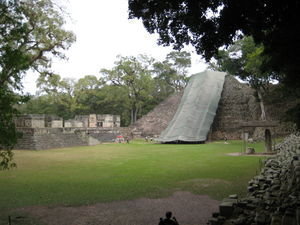
Situated at the Western Highlands, Copa Ruinas Archaeological Site is a World Heritage Site in Honduras. Some of the artifacts and ruins that can be seen at the place include a hieroglyphic stairway, a ball court and the Stelae of the Great Plaza. The ruins were from the Copan, a Mayan city 2,000 years ago.
La Tigra National Park
La Tigra National Park in Tegucigalpa is found at the altitude of 7,466 feet. The park is visited by many foreigners because it features a beautiful forest. It is the home of 200 bird species and other wildlife species including monkeys and pumas. Additionally, it features six hiking trails.
National Art Gallery
An impressive museum in Tegucigalpa, the National Art Gallery displays art collections and paintings. Most of the artworks displayed at the site were dated from the prehistoric times to the colonial times. The gallery is open to public from Monday to Friday from 10 am to 5 pm.
Lancetilla Botanical Gardens
An interesting tourist destination in Tela, the Lancetilla Botanical Gardens is the world’s second biggest tropical garden. The place has a hiking trail and a swimming hole. Aside from the 200 tropical bird species, tourists visit the site to see the Lancetilla River.
Rio Platano Biosphere Reserve

Another attractive site in the country is the Rio Platano Biosphere Reserve in La Mosquita. The places of interest at the reserve include the historic village of Palacios and the bird sanctuary in Plaplaya. Aside from these, people can also find the folk people in the villages of Belen and Raista.
Carambola Gardens
The Carambola Gardens at the Sandy Bay has hiking and trekking trails leading to the forests of ferns, palms and fruit trees. The gardens have a special breeding section for parrots as well as iguanas.
Roatan
Roatan is one of the most developed areas at the Bay Islands. The town features a cruise-ship port and several beaches. Scuba diving and fishing are two of the activities that people can enjoy at the site.
El Cusuco National Cloud Forest
El Cusuco National Cloud Forest in San Pedro Sula features the pristine Marendon Mountain Range. The forest is popular because it is a home to Quetzal. Hiking is one of the most exciting activities that can be done at the forest.
The Peak
The Peak in Tegucigalpa is a famous tourist destination that features Mayan ruins replicas. In addition, tourists can find a small zoo and a statue of Christ overlooking the town.
Pico Bonito Tropical Butterfly Farm and Serpentarium
Found at the Caribbean Coast, Pico Bonito Tropical Butterfly Farm and Serpentarium covers a land of 4,000 square feet. The farm features numerous tropical butterflies while the sepentarium is the home of 20 reptiles and snakes.
Honduras is a Central American nation that is rich in natural wonders as well as archaeological sites. Tourists who visit these places can enhance their understanding on the culture of people living in the country.

Saint Cathedral of Zipaquira in Cundinamarca – Colombia

The Salt Cathedral of Zipaquira is one of the best known tourist destinations in Colombia. To those who have never been there, it will be a site worth coming back to over and over.

Location and How to Get to This Specific Site

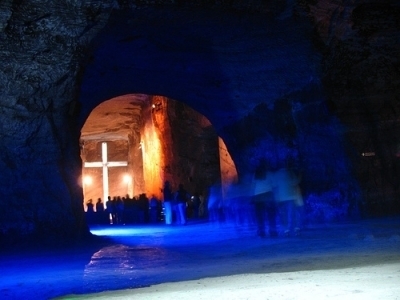
The cathedral is near the Zipaquira town about 47 km to the north of Bogota. The church can be found inside the salt mine’s tunnels 200 meters underground. The salt mine is in the Halite Mountain at Cundinamarca.

What to See There

The cathedral has 14 tunnels. There are stations of the cross that symbolize the life of Christ. There are lights in the tunnels that illuminate the way. At certain points, the lights will change color. The complex features an auditorium with a 200 seating capacity. Next to it are naves symbolizing Christ’s birth, life, death and resurrection.
The naves of Salt Cathedral of Zipaquira have several statues. Majority of them were created by miners. One of the most prominent features is the guardian angel sculpture. It was created by  
Ludovico Consorte, an Italian artist.
Visitors can also watch a 3D video detailing the salt mine’s geological history. The rock climbing wall is another popular feature.

History

Zipaquira has been mined since the 5th century BC. Current evidence points to the Muisca indigenous people as the first to conduct salt mining. The substance was used as currency. Later on, the Spaniards would build the town and mine the area extensively. The salt was also used by freedom fighters like Narino and Bolivar to fund their causes.
During the 1930s, the miners decided to build a salt cathedral. This cathedral became very popular, but it was shut down in 1955 for safety reasons. In 1995, the present cathedral was built. It was set 250 meters deeper than the original. The work required 250,000 tons of rock to be removed.

Cost

The entrance fee is $8.50 (17.000 COP).

Other Info

The cathedral is just part of the whole complex. The establishment includes a restaurant, a movie theater and other attractions. There are also proposals to build a wellness center and a salt spa. Tourists can avail of a guide. This tour will take about an hour. A half hour tour will also explain the dangers that the miners faced.
Since the Salt Cathedral of Zipaquira opened its doors in 1995, it has drawn over 13 million visitors. Today, it also functions as a place of worship every Sunday.

Las Lenas in Mendoza Province – Argentina

The Las Lenas ski resort is one of the most popular destinations in Argentina. This small village is devoted entirely to skiing, and will definitely be enjoyed by those who love the snow.


Location

The village can be found in the western section of Mendoza Province in Argentina. This ski resort is about 746 miles (1200 km) from Buenos Aires. Although it is a ski resort, the road is paved. Travel is rarely hampered by heavy snow.

What to See

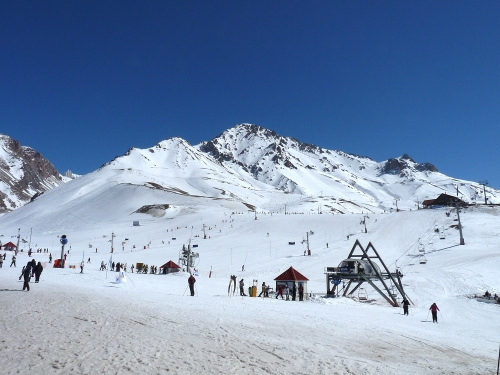
The ski area has many types of slopes, ranging from the extreme to the very easy. The ski area starts at 7,350 feet (2,240 m) above sea level. The highest peak is 3,937 ft (1,200 m). There are 27 runs with a total ski area of 2.3 km2 (1 sq mi). The maximum no stop distance is 4 miles / 7 km.
The Las Lenas ski resort village has a casino and a cinema. There are also many restaurants, night clubs and stores. There is also a snow tubing hill and supermarket. There are also game rooms. 15 minutes away from the village is Los Molles. There are many cabins and hotels there.
If you need to buy some equipment, there are several ski-related stores to choose from. There is also a bank, some souvenir shops and chocolate shops as well.

History

The available evidence shows that the area making up the Mendoza Province was first settled in by humans some 12-13,000 years ago. There is also evidence that in 300 BC, primitive people lived in the area. They were hunters and also engaged in the cultivation of beans, pumpkins and maize.
It was here that the Agrelo culture arose. This would go on to have a profound influence on the Empire of the Incas. According to the tradition, the Inca Tupac Yupanqui came in 1470.

Cost

There are many different tour packages available. A 7 day tour of
Argentina including a visit to Las Lenas will cost about 1300 USD. However, there are many options, so you should check each one first.

Other Info

The skiing season is from the middle of June until the middle of October. During the summer, the village is still open for climbing, horse riding and mountain biking.
The Las Lenas ski resort has a snowboard and ski school. These are open for children and adults. There are also numerous workshops available for skiers of all skill levels.

Iglesia de San Francisco in Caracas – Venezuela

The Iglesia de San Francisco is one of the main religious sites in Venezuela. Visited regularly by religious devotees, it is also now being frequented by tourists too.

Location and How to Get to This Specific Site

The church can be found in Caracas, the capital of Venezuela. The city is in the northern part of the country. You can get in by way of Maiquetía’s Simon Bolívar Airport. This is less than 30 km from Caracas. Taxis can get you in and around the city as well.

What to See There

The interior of the church is truly a sight to behold. The colonial architecture and the fine details on the wall and ceiling bespeak its history. Many of the relics on display are in the baroque style, including the altar. Despite the 19th century renovation done by Antonio Guzman Blanco, its classic look has been retained.
 
The church has several classical art pieces. Many date from the 17th century. Oil paintings, sculptures and different carvings are present. For hundreds of years, the Central University of Venezuela was kept at the cloisters of the church. These days it is the Language Academy seat.

History

The Iglesia de San Francisco was constructed in the 1570s. Around 1641, the structure was completely rebuilt. The new look of the church did not last, as it would be redecorated numerous times through the years.
While the church has been remodeled over and over, it has always maintained its religious following. However, it has only been in recent years that tourists started coming.

Cost

Taxi fares cost BsF 150, but tourists may be charged a bit higher. It is possible to negotiate the price with the driver, though.

Other Info

There are other interesting sites around Caracas. Not too far from the church is La Plaza Bolivar. Situated close to the city center, statues of the famous leader can be found all over the place.
Another religious building is the Caracas Cathedral. It was constructed in 1594 and can be found to the north of Plaza Bolivar. Bolivar’s parents are buried there. The church is also filled with art masterpieces. Among them are the Presentation of the Virgin by Murillo and Rubens’ Resurrection.
The Iglesia de San Francisco was the setting for the funeral of Simon Bolivar. It was conducted in the church a dozen years after he passed away. It was at this church in 1813 that he was declared the “Libertador”.

Montevideo – Uruguay

Montevideo – Uruguay is the capital city of Uruguay and also the country’s largest. It is the main port of the country which is part of the reason why Montevideo is the economic hub of Uruguay.
It has various museums, historical landmarks and charming villages where travelers are always warmly welcomed by the residents.

Location

Montevideo – Uruguay is located on the northern coast of Rio de Plata, about two hundred and thirty kilometers or roughly around one hundred and forty miles off Buenos Aires.

Getting There

You can fly in to Montevideo – Uruguay via the Montevideo International Airport situated approximately fifteen kilometers off the city centre. From the airport, you can easily catch a bus to get to the city centre.
You can also take a ferry ride from Buenos Aires and the trip usually takes three hours.
Buses from neighboring cities are also available if you will be coming from any one of these.

What to See

Architectural structures in the city are abundant, each one depicting either the Neo-Classical design pattern or the more modern designs of contemporary architecture.
The Palacio Salvo Legislative Palace, and Estévez Palace are such examples of structures in the city that have the Neo-Classical design pattern.
The old town of Ciudad Vieja has more historical buildings that you can view.
The Parque Prado is considered as the most beautiful of all six parks in Montevideo – Uruguay. Here, you can visit the rose garden, botanical garden and the Rural del Prado, which is used for farm animal and cattle fairgrounds during specific times of the year.
At the back of the botanical garden is the Presidential Residence. Museums that you can visit here include the Montevideo Cabildo which used to be a government office back in colonial times
.
 
Also of particular interest is the Palacio Taranco which was built in the early parts of the twentieth century. Designers of this building were also the designers of the Petit Palais and the Arc de Triomphe both located in Paris.
Today, the Palacio is home to the Museum of Decorative Arts.

Brief History

It was the Spanish Governor of Buenos Aires who first established the settlement in Montevideo between the years 1724 and 1726. The settlement was first designated as San Felipe y Santiago de Montevideo which was later made short to simply Montevideo.
A couple of years after it was founded, Montevideo – Uruguay became the main city of the area located on the northern section of Rio de Plata.
During the nineteenth century, Montevideo was occupied by British forces in the Battle of Montevideo but was later regained by the Spanish forces.
However, for eight years following this recapturing of Montevideo by Spanish forces, the city came under heavy siege through the leadership of Oribe who gained support from Buenos Aires.
At the end of the hostilities some time in the latter years of the nineteenth century, the city started rebuilding itself.

Cost

Accommodations in Montevideo – Uruguay are varied. You can find affordable bed and breakfast inns, hostels and hotels as well as more luxurious hotel suites. Budget accommodations range from USD 25 to USD 58.
More luxurious rooms cost about USD 99 up to USD 183.

Other Information

Montevideo – Uruguay has several festivals celebrated each year, most notable of which is the Montevideo Carnival which is in conjunction with Carnival Week being celebrated throughout the country.

Morrocoy National Park – Venezuela

Morrocoy National Park has many attractions and activities for the tourist. It is one of Venezuela’s most popular destinations.

Location and How to Get to This Specific Site

The park is situated close to Chichiriviche and Tucacas. This is in the northwest part of Venezuela. It is at the southeast sector of Falcon. If traveling by car from Caracas, go to the Caracas – Moron expressway. Head to Troncal 3 and go to Chichiriviche and Tucacas.

What to See There

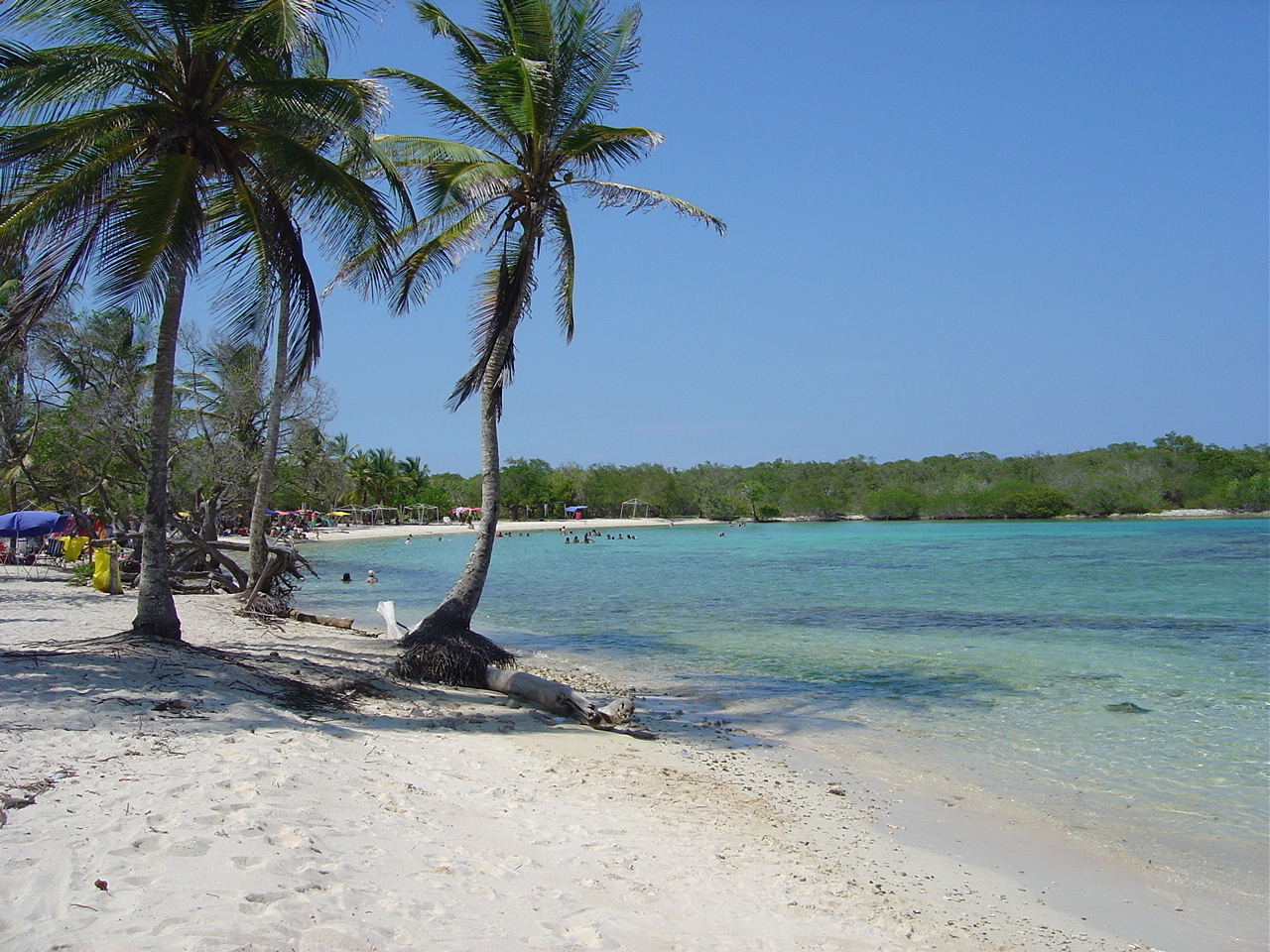
The park is famous for its white sand beaches. Tourists can sit back, relax and enjoy the sun. its crystal clear waters make swimming enjoyable. Coral reefs proliferate, which makes scuba diving even more fascinating.
A tour of its sea and continental areas will reveal shorelines and mountains. Morrocoy National Park and the surrounding area are famous for its mangrove swamps. Cayos is a 32,000 hectare island. It is another popular tourist destination.
The ” Isla de Aves” is an island used for research. Most of the studies conducted are related to ornithology. The Cueva del Indio is filled with petroglyphs and is a top tourist draw.
 
There are many types of plants in the park. Some of them are “Olivo Caparis”, “Saladillo” and “Indio desnudo”. Many types of seaweed vegetation can be found as well.
266 types of birds can be found in the park. Some of the species you will see are the “tijeretas de mar”, “corocoras”, herons, pelicans, and flamingos. Dolphins, turtles, fish and whales also abound.

History

The site was declared a national park by the Venezuelan government. This was done on May 26, 1974 so it could be protected from human activities. Since its establishment, tourists have flocked to the site to enjoy the scenery and relax. While the area is carefully preserved, picnic areas have also been established.

Cost

If you are flying in from abroad, ticket fares will vary. The bus fares usually cost 18 BsF per passenger. A taxi ride may cost 18 BsF.

Other Info

Different types of flora and fauna can be seen in the park, which is another reason why it draws visitors. Many people go there during the holidays and weekends. During this time, expect to see a lot of water sports activity going on.
The Morrocoy National Park also has the Cerro Chichiriviche mountain where you can relish the scenery. Along the shoreline you can go fishing. You need to get permission first though.